
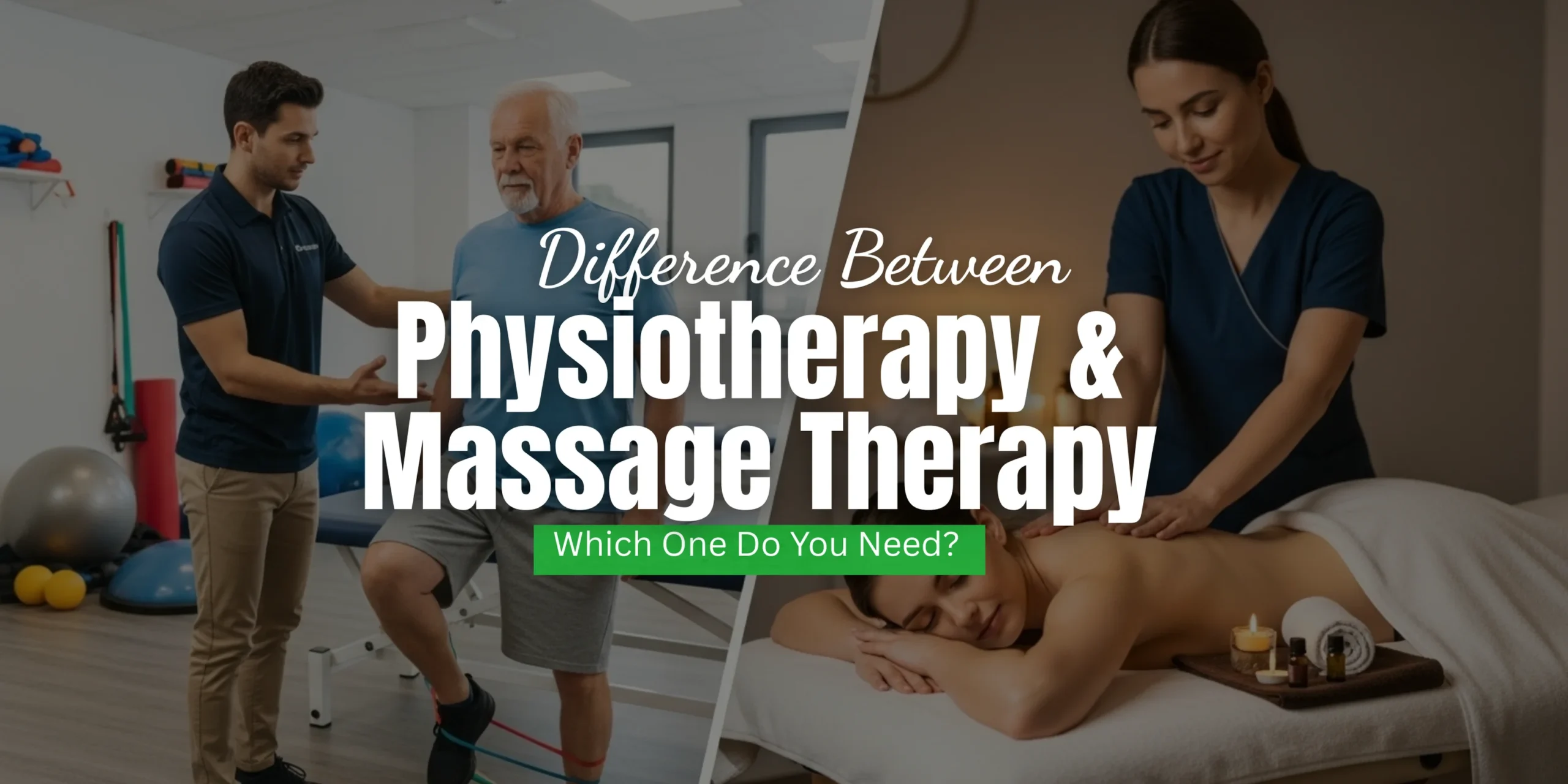
When pain, stiffness, or limited movement starts interfering with daily life, many people ask the same question: physiotherapy vs massage, which one is right for me? Both treatments are widely used to manage pain, improve mobility, and support recovery, but they serve different purposes.
Understanding the difference between physiotherapy and massage therapy can help you choose the right treatment for your condition, whether you’re dealing with back pain, a knee injury, muscle tightness, or a postural issue. At Pro Active Clinic, our goal is to guide patients toward the care that best supports long-term health and recovery.
What Is Physiotherapy?
Physiotherapy is a healthcare treatment focused on restoring movement, strength, and physical function. It is commonly recommended after injuries, surgeries, or for chronic conditions that affect the muscles, joints, or nervous system.
A physiotherapy treatment plan is based on a thorough assessment of how your body moves and functions. Treatment often includes targeted exercises, manual therapy, posture correction, and education to help prevent future injuries.
Physiotherapy is frequently used for:
- Back ache physiotherapy and spinal conditions
- Physiotherapy on the knee for ligament injuries or arthritis
- Sports injuries and workplace injuries
- Post-surgical rehabilitation
- Chronic pain and mobility limitations
The goal of physiotherapy is not just pain relief, but long-term recovery and improved function.
What Is Massage Therapy?
Massage therapy focuses on hands-on techniques that target muscles and soft tissues. If you’re wondering what massage therapy is, it is a treatment designed to reduce muscle tension, improve circulation, and promote relaxation.
Massage therapy is commonly used to address:
- Muscle tightness and stiffness
- Stress-related tension
- Postural discomfort
- Minor aches and pains
The benefits of massage therapy include improved blood flow, reduced muscle soreness, and temporary pain relief. Massage therapy is often helpful when discomfort is related to muscle overuse, stress, or tension rather than an underlying movement or joint issue.
Difference Between Physiotherapy and Massage Therapy
Understanding the difference between physiotherapy and massage therapy is essential when deciding which treatment best suits your needs.
Treatment Goals
Physiotherapy focuses on long-term recovery and restoring function. It aims to correct the root cause of pain or dysfunction and prevent the issue from returning.
Massage therapy primarily focuses on symptom relief and muscle relaxation. It helps reduce tension and discomfort but does not typically address movement patterns or structural issues.
Treatment Techniques
Physiotherapy treatment may include:
- Therapeutic exercises
- Manual therapy and joint mobilization
- Postural and movement education
- Strengthening and flexibility programs
Massage therapy relies on:
- Hands-on muscle and soft tissue techniques
- Trigger point therapy
- Relaxation-based treatments
Conditions Treated
Physiotherapy is commonly used for injuries, post-surgical recovery, chronic conditions, and mobility limitations.
Massage therapy is more effective for muscle tightness, stress-related pain, and general muscular discomfort.
Duration of Results
Physiotherapy aims for long-term correction by addressing the underlying cause of pain.
Massage therapy often provides short-term relief, especially for muscle tension, but symptoms may return if the root cause is not treated.
Practitioner Training
Physiotherapy is provided by licensed physiotherapists with extensive university-level education and clinical training.
Massage therapy is delivered by Registered Massage Therapists (RMTs), who are trained in soft tissue techniques and muscle therapy.
Physiotherapy vs Massage Therapy for Common Conditions
For back ache physiotherapy, physiotherapy is often recommended when pain is linked to posture, disc issues, or movement dysfunction. Massage therapy may help relieve muscle tightness but may not resolve the underlying issue.
For physiotherapy on the knee, physiotherapy is essential for ligament injuries, arthritis, or post-surgical rehabilitation. Massage therapy can support muscle relaxation around the knee but does not replace structured rehab.
In cases of general muscle soreness or stress, massage therapy may be sufficient. However, when pain affects movement, strength, or daily activities, physiotherapy treatment is usually the better option.
Can Physiotherapy and Massage Therapy Be Combined?
Yes. In many cases, physiotherapy and massage therapy work best when combined. Massage therapy can help reduce muscle tension and pain, making it easier to perform physiotherapy exercises effectively.
At Pro Active Clinic, treatment plans may include both services to support faster recovery and better outcomes.
What to Expect During Your First Appointment
Your first visit typically includes an assessment to understand your condition, symptoms, and goals. Based on this evaluation, the therapist will recommend physiotherapy, massage therapy, or a combination of both.
Is physiotherapy better than massage therapy?
Physiotherapy is better for long-term recovery, injury rehabilitation, and functional improvement. Massage therapy is better for muscle relaxation and short-term pain relief.
Can massage therapy replace physiotherapy?
Massage therapy cannot replace physiotherapy when treating injuries, joint problems, or movement limitations that require rehabilitation and corrective exercises.
Do I need a referral for physiotherapy?
In most cases, you do not need a referral for physiotherapy treatment in Ontario, although some insurance providers may require one.
Are these treatments covered by insurance in Ontario?
Many extended health insurance plans cover both physiotherapy and massage therapy. Coverage varies by provider and plan.
Conclusion
When comparing physiotherapy vs massage, the right choice depends on your condition, goals, and the cause of your symptoms. Understanding the difference between physiotherapy and massage therapy helps ensure you receive the most effective care.
For injury recovery, chronic pain, and functional improvement, physiotherapy treatment is often the best option. For muscle tension and relaxation, massage therapy offers valuable benefits. At Pro Active Clinic, patients receive personalized care designed to support recovery, mobility, and long-term wellness.
Book your consultation at Pro Active Clinic today to find the right treatment for your needs
